
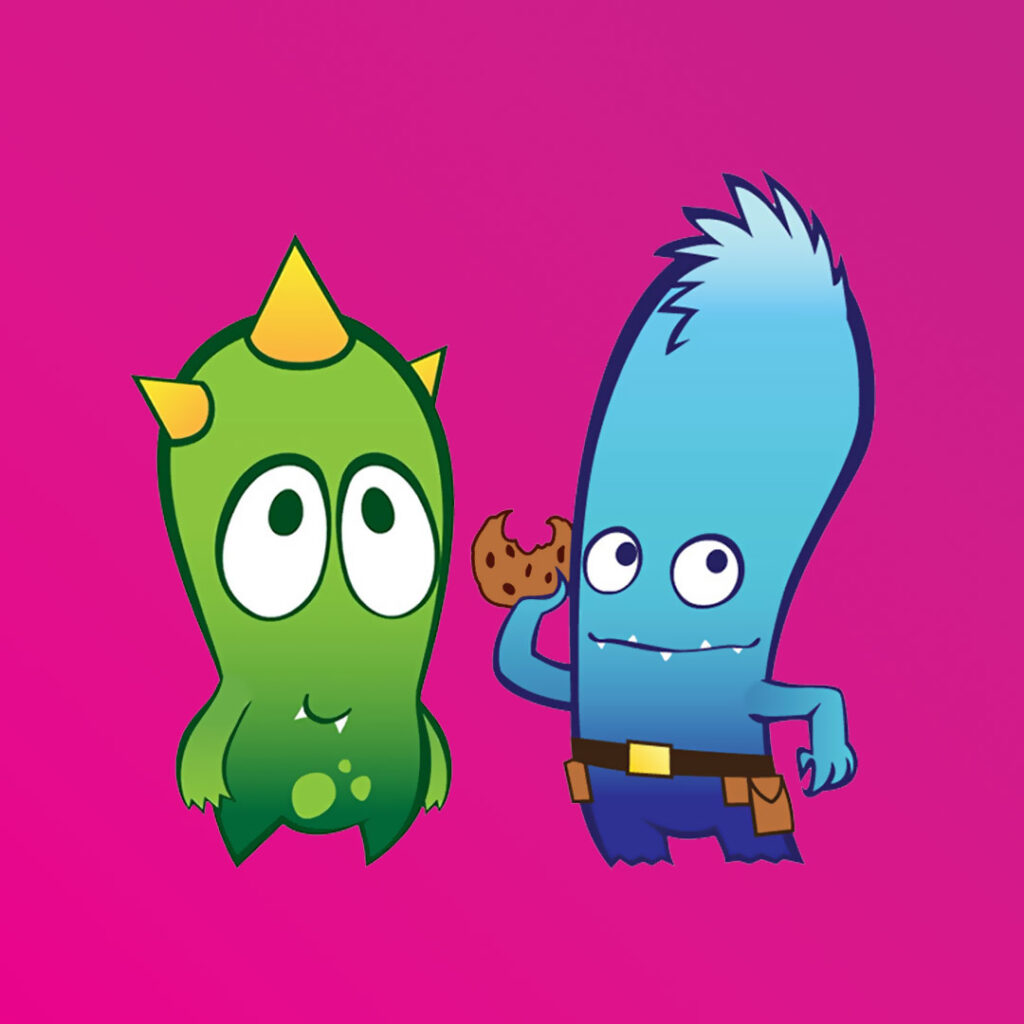
Mascots have super powers
What’s the special power of a mascot compared to a logo?
Mascots tap into our primal instinct to humanize animals or objects, known as anthropomorphism (1, 2).
Brand mascots spark a connection between a consumer and a product (3). We love these characters because they’re just like us.
Mascots build brand affinity in a way that a simple logo can’t.
Sources:
1. Epley, N., Waytz, A., & Cacioppo, J. T. (2007). On seeing human: A three-factor theory of anthropomorphism. Psychological Review, 114(4), 864–886. https://doi.org/10.1037/0033-295X.114.4.864
2. Chartrand, T.L.; Fitzsimons, G.M.; and Fitzsimons, G.J. Automatic effects of anthropomorphized objects on behavior. Social Cognition, 26, 2 (2008), 198–209. https://doi.org/10.1521/soco.2008.26.2.198
3. Yuan, L. (Ivy), & Dennis, A. R. (2019). Acting Like Humans? Anthropomorphism and Consumer’s Willingness to Pay in Electronic Commerce. Journal of Management Information Systems, 36(2), 450–477. https://doi.org/10.1080/07421222.2019.1598691
Nice animation of your logo. I'm probably going to buy it just because of that. Fist bump somebody in marketing for me.
YouTube Comment, Oberheim TEO-5 Promo

Mascots make your brand...
Trustworthy
As people seek more authentic voices online, they’re placing more trust than ever in personalities over brands. Mascots are also great for serialised engagement, recurring content formats and episodic storytelling which builds stronger long-term relationships than one-off virality.
Engaging
People want to engage with mascots. The Duracell Bunny has 22.6k followers on Instagram and GEICO’s gecko has 37k. Mascots are more versatile than influencers in three important ways: 1. you always have full control of the message, 2. they can be everywhere at once, and 3. they never stop.
Eternal
The Michelin man first appeared in 1898. Planter’s Mr. Peanut was born in 1916 and was still featured in the 2020 Super Bowl ad. The longer a mascot lives the more powerful it seems to become. When these characters become part of the landscape of our memory, they can live forever.
Mascots can teach
Mascots are an incredibly powerful learning tool. They bring a relatable presence to help learners navigate complex topics and reinforce understanding in ways that feel human rather than instructional. They make learning memorable.
Think of Duolingo, whose green owl mascot has now developed into an entire playful universe of characters, stories, and interactions; the brand’s Instagram has over 5 million followers.
When done well, mascots do more than decorate learning, they create connection, continuity, and a world learners want to return to.
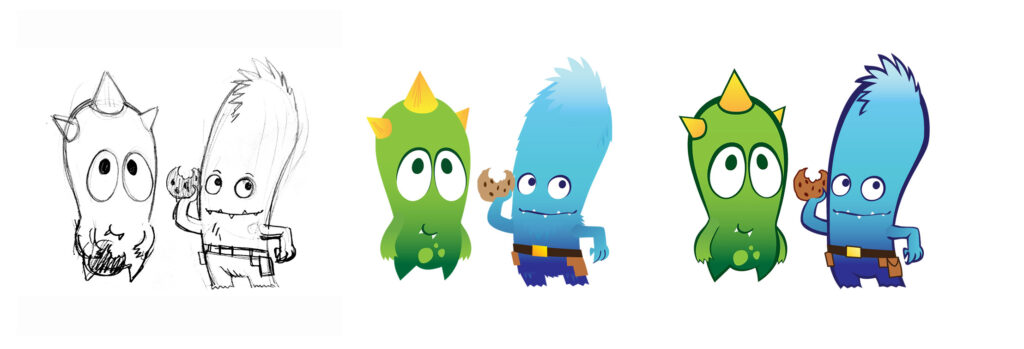
These cookie monsters were developed for a course educating users about data safety online.
Measurable impact
Research has found that anthropomorphizing the way a product is displayed increases willingness to pay by creating attachment to the product.
In 2018, Orlando Wood released a study on the use of mascots, which he calls a character Fluent Device, in advertising.
“The character Fluent Device is one means of unlocking growth over the long term. It develops greater emotional response and promotes processing fluency.”
Orlando Wood, Creativity & Effectiveness: Developing creative best practice for long-term growth in a multi-platform world
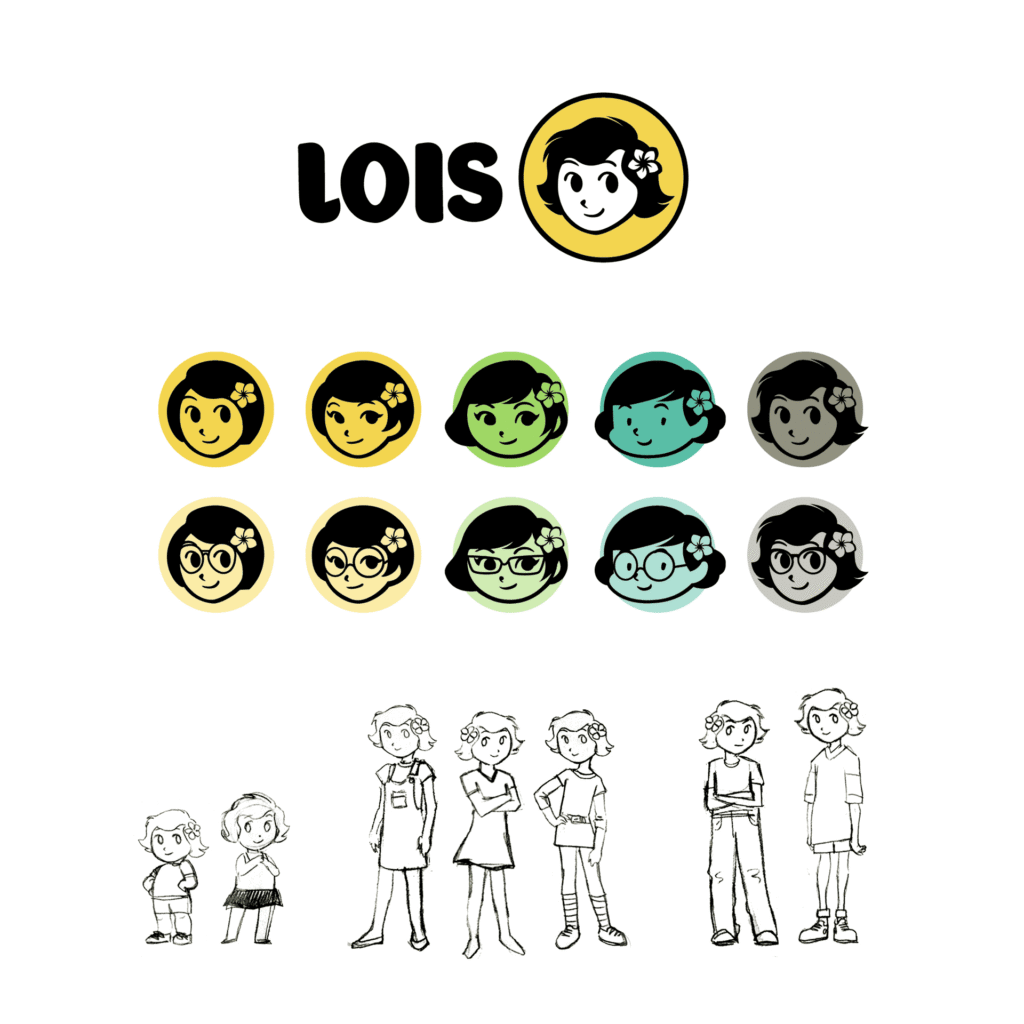
Mascot development for an internal piece of software at a tech company.
Orlando Wood found that long-term campaigns featuring a mascot will…
…increase New Customer Gain by 40.9% compared to 32% for campaigns without a mascot.
…increase Market Share Gain by 41% compared to 29.7% for campaigns without a mascot.
…increase Profit Gain by 34.1% compared to 26.2% for campaigns without.